I read this article today, and it claims that 1 in 10 boys at age 10 are taking prescription meds for ADHD. I was appalled, and yet sadly unsurprised. My opinion might not be popular, but I do not believe that many children have a disorder, any disorder so severe that they need to be drugged. Of course, doctors who want financial kickbacks from the drugs they shove on everyone and teachers who want obedient little zombies will tell you that the drugs will bring out the best in your child and make your and your child's life better.
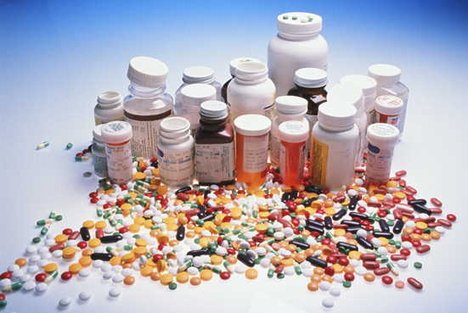 |
| Photo credit: stoptherobbery.com |
Now, I get that some people do have focus problems, and among them there is a subset who struggle so severely that they do, for a period of time or in certain circumstances, require intervention. Drugs, though, should be an absolute last resort after all other options have been completely exhausted - and I'm not just talking about the patience of parents and teachers, which I believe is frequently the case.
I'm not necessarily blaming the parents and teachers; the Every Kid Gets a Trophy generation is grown up, and things have only gotten worse as they start having children of their own. Generation Y has been raised on Ritalin and happy pills, while the real problems that exist in families and classrooms are not properly addressed. Unhappy? Here's a pill, because you must have depression. Stressed out? Here's another pill, because you must have anxiety disorder. Having trouble concentrating in school? Obviously you have ADHD, because there's no way it has anything to do with the mundane, repetitive, unfulfilling experience you shuffle through day in and day out with little to no reward for your efforts beyond what all those standardized tests say.
The larger problem is the structure of our society, particularly traditional education and the increasing demands on children with the concurrent deterioration of the real work of childhood, namely play. Children need free time to grow and develop, but when are they getting it? Childhood has been pathologized like a disease, while at the same time, schools are removing recess, shortening lunch and free periods, and burdening kids with huge homework loads so that they have no free time to develop who they are as people. I guarantee that more free time, play time, recess time, and/or physical activity would do a child far more good than any prescription drug. Big Pharma would disagree, as would the people who want that child's time to be their own. I guess it works for the system, doesn't it? Make sure kids' time is always accounted for, keep pouring information that they care little or nothing about into their heads like empty containers, structure their lives to the point they have no say or will, and medicate them into submission when they appear restless, frustrated, bored (termed ADHD, oppositional/defiant, and autistic by allopaths and drug companies).
Parents largely turn to doctors and drugs to help them with their children because the direction of our society. When I grew up, my dad worked and my mother stayed at home. Mother was a fast food junkie, but when she wanted to cook and we sat down for family dinners, it was great. It was close and I felt like part of a family. The painful regimentation of children's schedules, testing for the sake of scores to bring money into school districts, the degeneration of the family unit, the mountains of homework which effectively obliterates any potential family time and adds stress to the household, the epidemic of bullying, not to even mention the poison in our food, courtesy of Monsanto, are all contributing factors to the problems our children (as a societal whole) face today.
Even as a child, I realized the flaws in education. Of course, at the time, I was simply a child who was annoyed with school and early mornings. People do not generally listen to children. That, in my opinion, is a mistake. To maintain my sanity, I would ask multiple times per day to go to the restroom because I was so painfully bored in class. The days were, in my opinion, far too long. It felt wrong, and I often compared it to a 13-year prison sentence, having to be forced out of bed, day after day, into a place I didn't want to be with my perfectly age-matched peers. Why were children treated so poorly, I wondered. I used to look around at my classmates, wondering how they managed to sit there, still and at least feigning the appearance of attention, for that duration. That was not how I learned. I suspect, if I were that child in school now, people would recommend Ritalin or some mind-numbing drug to shove me into submission. I was simply bored, and I don't comprehend how people can't grasp the concept that many children probably are. That's not a disorder; it's the way the education system is set up that is pathological.
I consider traditional public schools to be brainwashing centers and prisons for children which slowly but surely detach them from their families and drain their will, individuality, and curiosity from them. Education is not about learning, it's about test scores and money. Children are miserable, then they get drugged, and then a portion of them do crazy things and people wonder why. Healthcare has become sick care, where doctors no longer treat the disease, but prescribe pills to mask symptoms and to deal with normal feelings and emotions. Childhood has become a disease with a number of diagnoses. People are no longer eccentric, daydreamers, creative, or strong-willed; now they are autistic, ADHD, defiant, and need to be medicated.
The public education system needs serious overhauling. Will it actually happen? Not soon enough, if ever. The trajectory doesn't look good, and I have little hope.
This is why I homeschool.
Recommended reading: Dumbing Us Down: The Hidden Curriculum of Compulsory Schooling by John Taylor Gatto, Thomas Moore

 As for G, the boy starts his mornings by hugging his beloved Math workbook. Now, I've never witnessed that kind of enthusiasm from kids in bricks and mortar schools. One of the things that bothered me most about sending my kids to school was the concern that they would lose the love of learning they both have.
 Even our cat has something to say about traditional schools...
 Or, okay, maybe she was just yawning instead of acting all ferocious and scary. Sticky is probably the calmest, most tolerant cat on the face of the planet.
 R also enjoyed some Science experiments today. We discussed bouncy balls and which would bounce higher and why. She did trials and recorded what happened each time, dropping them from different heights. She also compared how an empty water bottle versus her bear's brush compared in "bounciness". The water bottle won, in case you're wondering. It won big. The brush just sort of hit the floor like a brick.
 We also did an experiment to learn whether salt would dissolve more quickly in hot versus cold water. Hot won, of course, and we discussed why and what other things hot water is used for dissolving (dirt on our clothes in the washing machine, messes on the table after dinner, and so forth). The salt-in-water experiment is a fun one, which is more fascinating for kids than you might expect. We did this years ago when she was in preschool, though she doesn't remember. I recommend it! For our next Science lesson, I think we're going to cook up something extra fun...but I'm keeping it a secret for now.
 In this photo, G illustrates the only problem I have encountered so far; he wants to do math all. the. time. He would complete that book inside of a week if I let him, I'm fairly certain. We've been using workbooks with the kids for years, and he particularly enjoys the math ones. He burned through the preschool one in less than a week, so we bought him a Kindergarten one. He was through that one in a few days as well, so we bought him a first grade workbook. That one actually lasted a couple of weeks. In the weeks before the start of this academic year, Little G had adopted the math portions of his sister's second grade math workbook and was addicted to Sudoku puzzles. While visiting my grandma several months ago, G asked (and answered) loudly, "What is 1 + 2 + 3 + 4? It's 10!!!" The kid has some sort of little calculator center in his head. It's very cool. And I'm just a little envious.